
Searching the Rich County Court Docket
Utah Courts XChange Public Case Search carries the online docket history. It serves both Rich County courts. Pick the right court first. Justice court usually owns traffic matters, infractions, class B or C misdemeanors, county ordinance cases, and small claims. District court takes felonies, class A misdemeanors, domestic and probate matters. It also holds judgments, property disputes, and most civil claims. Choosing wrong wastes the search.
A case number is the best key when you have one. Without it, try a surname or company name. Then narrow by location, court type, case type, or date. Traffic citations add a wrinkle. Pair the citation number with its issuing location, because those numbers are not unique statewide. Before trusting any match, confirm the county, court, filing date, parties, judge, and case type.
- Identify district or justice court from the notice or case type.
- Check the Full Court Calendar first for an upcoming hearing.
- Open XChange and select the proper Utah jurisdiction.
- Search by case number or carefully filtered party name.
- Read Case History/Documents in date order and verify location.
- Ask the clerk for a public record not exposed online.
Parties to eligible cases can work through MyCase instead. Everyone else uses XChange. Audio recordings and certified copies take separate request routes through the clerk.
Rich County XChange Search Fields
The official XChange help page walks through each search field and explains wildcard searching. Results stop at 500, so a common surname needs tight filters. Put a business in the last-name or company field. Many case numbers open with two digits that hint at the filing year. That clue alone will not pin down a case.
| Field | Best use | Verify |
|---|---|---|
| Case number | Known court case | County, court, type |
| Last name/company | Party search | First name and role |
| Citation number | Traffic matter | Issuing location |
| Date range | Filing or disposition | Date category |
| Jurisdiction | District or justice | Rich County location |
The official entry screen shows guest, login, and setup choices.
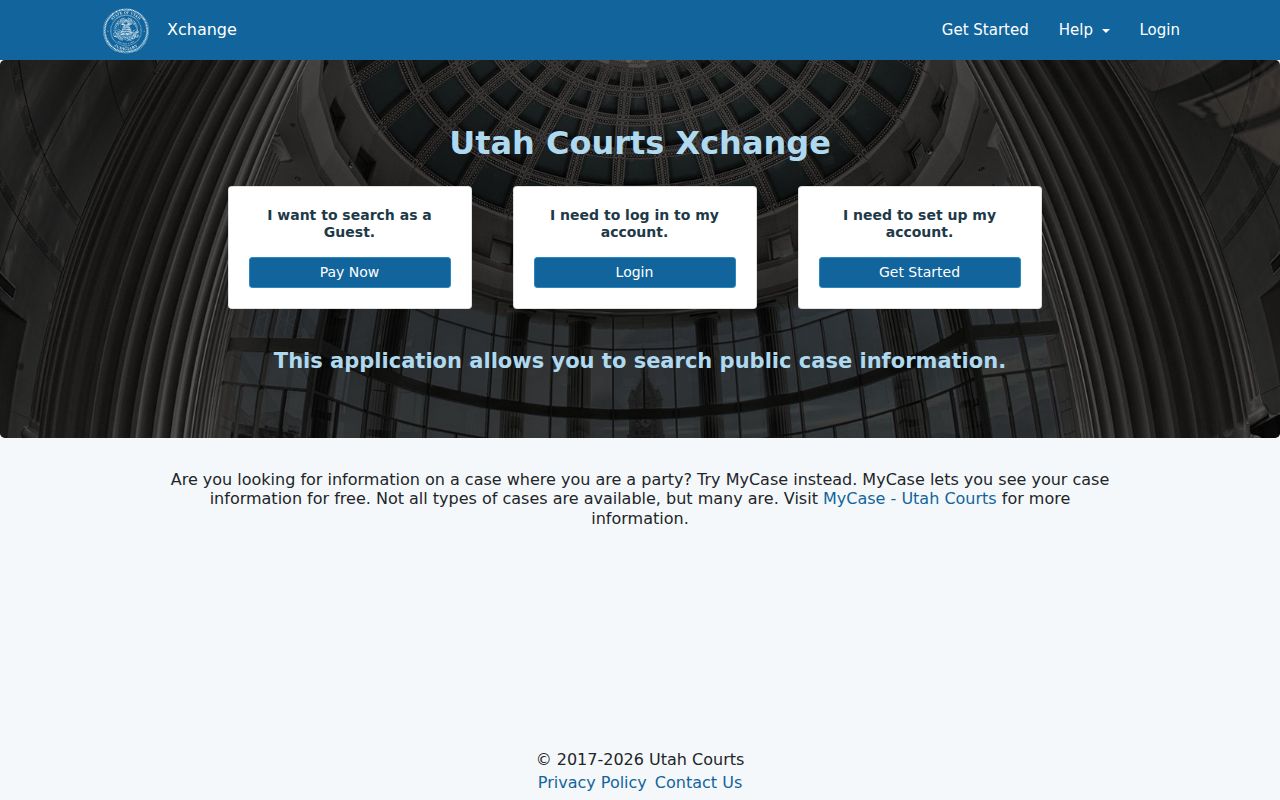
Which account you choose does not change whether a record is public. Even a query that returns nothing can still be billable.
Inside a Rich County Court Docket
XChange labels the chronological register "Proceedings" and the main view "Case History/Documents." A Rich County court docket may name parties and counsel, list accepted filings and settings, record minute entries, and state judgments or dispositions. Read the lines carefully. An entry saying an order was signed is not the signed order itself. The underlying image may not be available for public purchase.
| Case number | Court identifier; verify the full number and location. |
|---|---|
| Parties | Names and role codes, such as plaintiff or defendant. |
| Proceedings | Filed papers, hearings, orders, and events in date order. |
| Settings | Scheduled dates subject to a later reset. |
| Court and judge | Jurisdiction and officer assigned to an event. |
| Disposition | Recorded resolution of a charge, claim, or case part. |
The Utah public-record overview describes statewide district and justice coverage.
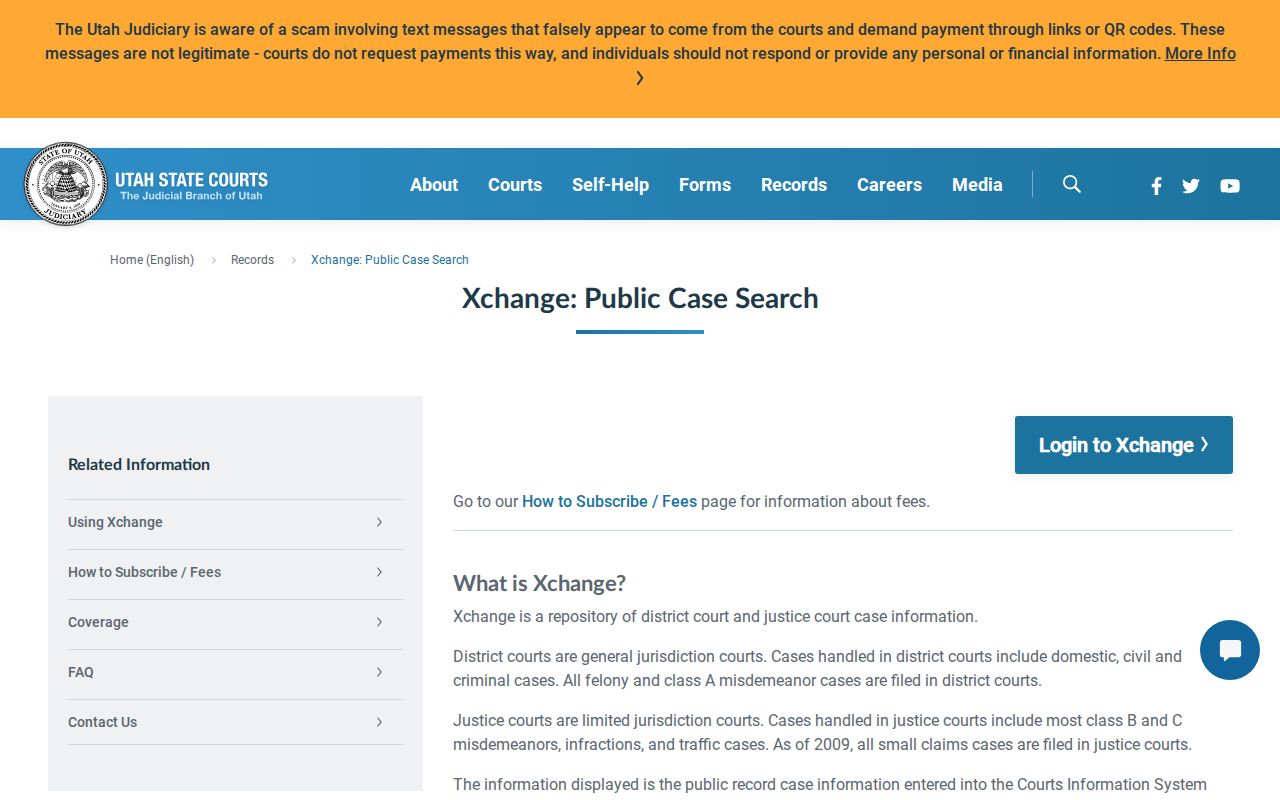
Public status is what governs access, and an index entry alone does not open or complete every document beneath it.
Rich County Courthouse Record Route
Start locally with the Rich County court page. Both courts share one address: 20 South Main, Randolph, Utah 84064. The telephone is 435-793-2415 and the fax is 435-793-2410. Shantel Jensen serves as deputy clerk within the unified Utah State Courts structure. That judicial role is distinct from a county government's general clerk work. Call ahead when the court level, format, or public status is unclear. Have the filing year, case type, any known number, and your task ready: inspection, copy, audio, or a setting check. Utah Courts states that public CORIS access is free at most district courthouses. It is also free at the State Law Library. Confirm the exact Rich County terminal location before counting on it.
Rich County Courts
Rich County Courthouse
20 South Main
Randolph, UT 84064
435-793-2415
The official page gathers local court links and contacts.
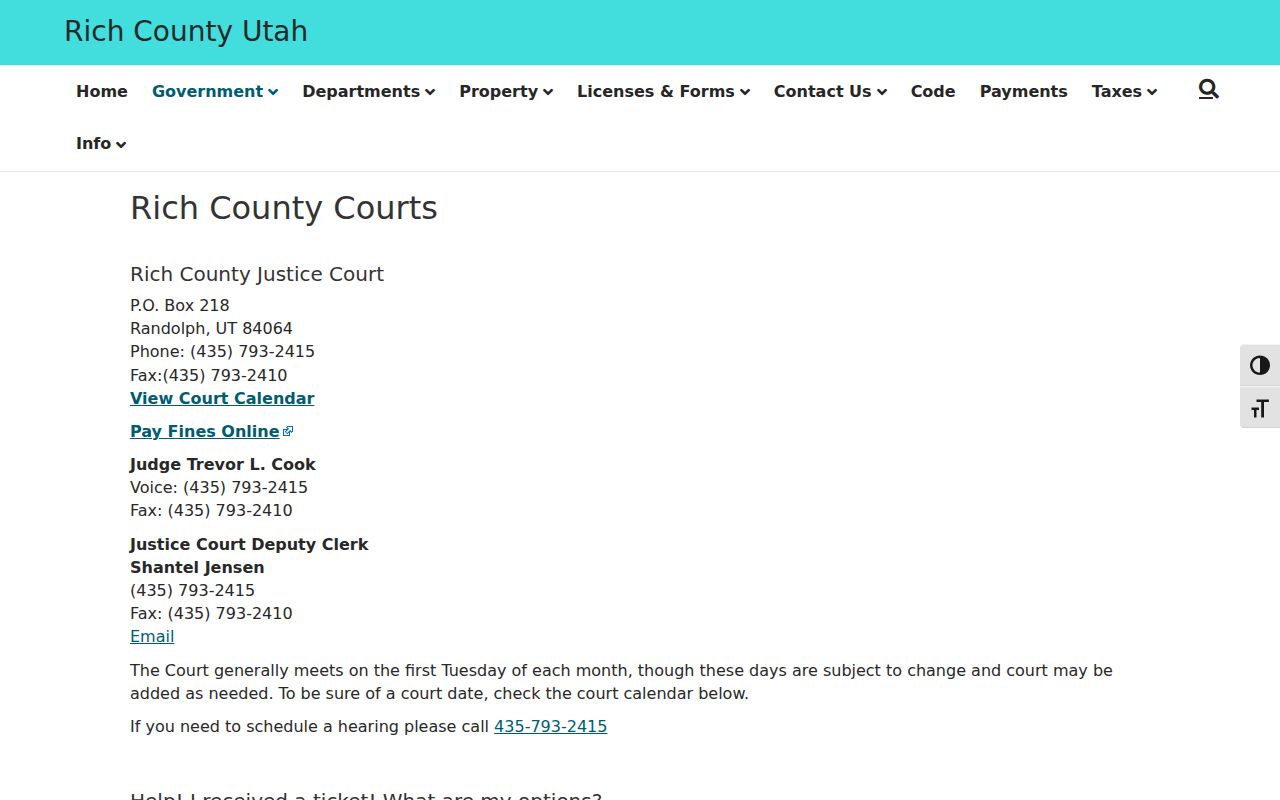
Use the court line for anything judicial, since a town meeting calendar is not a case docket.
Courts That Keep Dockets in Rich County
Two Utah trial courts handle most local docket searches. District court sits in the First Judicial District alongside Box Elder and Cache counties. Justice court covers lower-level criminal, traffic, ordinance, and small-claims work. Garden City has an Administrative Court page. But it publishes no docket search and does not spell out its full jurisdiction. The citation or order itself is the best guide for routing a case.
| Court | Matters | Search route |
|---|---|---|
| First District Court | Felony, class A, civil, domestic, probate, judgments | XChange, courthouse, calendar |
| Rich Justice Court | Traffic, infractions, class B/C, ordinances, small claims | XChange, courthouse, calendar |
| Garden City Administrative Court | Scope requires confirmation | Town contact route |
| First District Juvenile Court | Juvenile and child-welfare cases | Juvenile clerk, not public XChange |
| Utah appellate courts | Assigned trial appeals | Appellate docket tools |
Laketown, Randolph, and Woodruff post no searchable municipal court pages of their own. Check the case paperwork or ask the town directly rather than assuming jurisdiction.
Rich County First-Tuesday Settings
Rich County Justice Court generally convenes the first Tuesday of each month, per the county. Dates can shift, and extra sessions happen. The live calendar plus clerk confirmation always controls. The schedule says nothing about how many matters get heard.
Setting check: Rely on a current notice, live calendar entry, or direct court confirmation, not the monthly pattern alone.
When told to schedule or confirm a hearing, call 435-793-2415. Ask whether a changed entry was continued, reset, canceled, or moved online, since none of those words alone means the case ended.
How to Find Court Dates and Settings
The Full Court Calendar is the fastest official route to upcoming public settings. It searches by case number, party, judge, attorney, bar number, date, and location. Rich District uses location 1705D. Rich Justice uses 1708J. A report can show the court, date, judge, case number, caption, type, attorneys, and charges. Utah refreshes calendars on weekdays at 5:30 a.m. Some remote entries carry Webex links. If no link appears, contact the court. Attending a public hearing does not permit recording or photography. And a listed setting does not prove the hearing actually happened. For the full workflow, use Rich County Court Dates. Compare the calendar against the latest case notice, and confirm any appearance that matters.
Rich County Docket Access Costs
Walking into the courthouse is free. So is public inspection at court access points. Online use costs money under the published XChange schedule. A one-time transaction runs $10 for up to ten searches, a subscription costs $25 to set up plus $40 monthly for 500 searches, extra searches run $0.35 each, and available public documents cost $1 apiece.
| Item | Published fee |
|---|---|
| Court access-point inspection | Free |
| One-time XChange use | $10, up to 10 searches |
| Subscription setup | $25 |
| Monthly subscription | $40 |
| Public document | $1 |
| Paper court copy | $0.25 per sheet |
Media, audio, mail, staff time, fax, and email requests carry separate fees. Waivers may apply. Confirm current pricing before any large request.
Public Access to Court Dockets
Utah judicial records answer to court access rules. GRAMA sets a baseline, but judicial classifications control. Anyone may inspect a public history. Private, sealed, juvenile, and expunged material requires a specific entitlement and a proper request.
Key Rules:
UCJA 4-202.02 classifies public and restricted court records.
UCJA 4-202.03 states who may access sealed or expunged records.
UCJA 4-202.04 gives the written clerk request route.
UCJA 4-202.08 governs copies and fees.
Utah Code 63G-2-201 provides the GRAMA baseline.
The Request for Record form allows up to ten business days for an ordinary decision. A nonpublic request must explain its legal access basis and include any required authorization.
Rich County Records Before 2000
XChange's coverage table lists June 26, 2000 for the Randolph district connection. Converted files from earlier years may hold less history. A sparse old record calls for a clerk check. That is not proof no case existed. Give the year, names, case type, and likely court. Newer filings can lag too. Staff may not have entered them yet. A classification may block display, or the search terms may be too narrow. The county says citations can take five days to appear. Deadlines still apply. An empty result means verify the query and access route, not that the case was dismissed.
Docket Records at the Clerk's Office
The deputy clerk feeds the Rich County court docket. Indexing covers case numbers, parties, settings, proceedings, judgments, and dispositions, plus access classifications. A public history line can differ in status from its underlying document. Documented channels include in-person inspection, written record requests, copies, certification, and audio. Rich District audio follows Utah's transcript process. Send audio email to rich_po@utcourts.gov. Describe the record well. State whether you need inspection, a plain copy, a certified copy, or audio. The clerk cannot bypass a sealed order. If access is refused, ask which rule or classification controls, so any review request follows the proper route.
Rich County Docket Terms Decoded
Utah histories rely on short labels, so read each one in context and lean on the signed order when the shorthand is unclear.
- Proceedings
- The dated list of filings, hearings, orders, and events.
- PLA / DEF
- Plaintiff and defendant party codes.
- PET / RES
- Petitioner and respondent codes.
- Continuance
- A setting moved; not a dismissal.
- Disposition
- The recorded resolution of a case part.
- TN / TC
- Utah traffic citation or court case codes.
A filing line still does not guarantee a downloadable image, and certified copies come only from the clerk.
Restricted Rich County Docket Records
XChange leaves out sealed, expunged, and ordinary juvenile cases. Some domestic, probate, adoption, commitment, custody, and support material stays private too. Public hearing minutes, judgments, or decrees can remain open unless separately restricted. The classification attaches to the record or document itself. One public case can hold both visible history and papers a general user cannot open. Absence is not proof. An event may have happened even when expungement or automatic traffic deletion blocks access. Anyone with a legal right should file a written request. State the basis. Attach authorization or an order. Search tricks never create access rights. The clerk handling the request may require proof of the requester's role. That could be a party, counsel, a guardian, or someone the governing rule names. Describe the item with care. Keep sensitive personal data out of an ordinary inquiry. Utah's automatic deletion rules also shape what a traffic search displays. An acquittal or a qualifying dismissal can trigger deletion under current law. So can the end of a statutory wait. That is not the same as a finding that no citation was filed. It may leave a Driver License Division record untouched. Court history questions go to the court. Driving-history questions go to the responsible state agency. Juvenile cases route through First District Juvenile Court in Logan. Appellate matters use Utah appellate tools, not XChange. Federal cases run through PACER instead. The Utah Court of Appeals hears many trial-court appeals. The Utah Supreme Court takes matters assigned by law or transfer. Neither appellate system is the Rich County trial record. A federal civil or criminal filing goes through the District of Utah. Bankruptcy belongs to the federal bankruptcy court. Those systems carry their own clerks, fees, and docket numbers. A partial Rich County search calls for one question first. Is the missing item a case, a docket entry, or a document? Then ask the proper clerk about classification and the request form. A public case-history entry can survive even when a related filing is private. A sealed or expunged case can show nothing at all. The access rule and any court order control, not the breadth of your search terms.
Rich County Court Dockets by City
Rich County has four incorporated towns. Garden City alone posts an official Administrative Court page, and it offers contact details rather than a docket search. Randolph is the courthouse community. Laketown and Woodruff publish town resources but offer no searchable municipal court portal.
Council agendas and public meetings are not judicial records. Use the court named on your citation or order, and if Garden City Administrative Court is named, call the town to confirm its route.
The official county cities directory lists all four places.
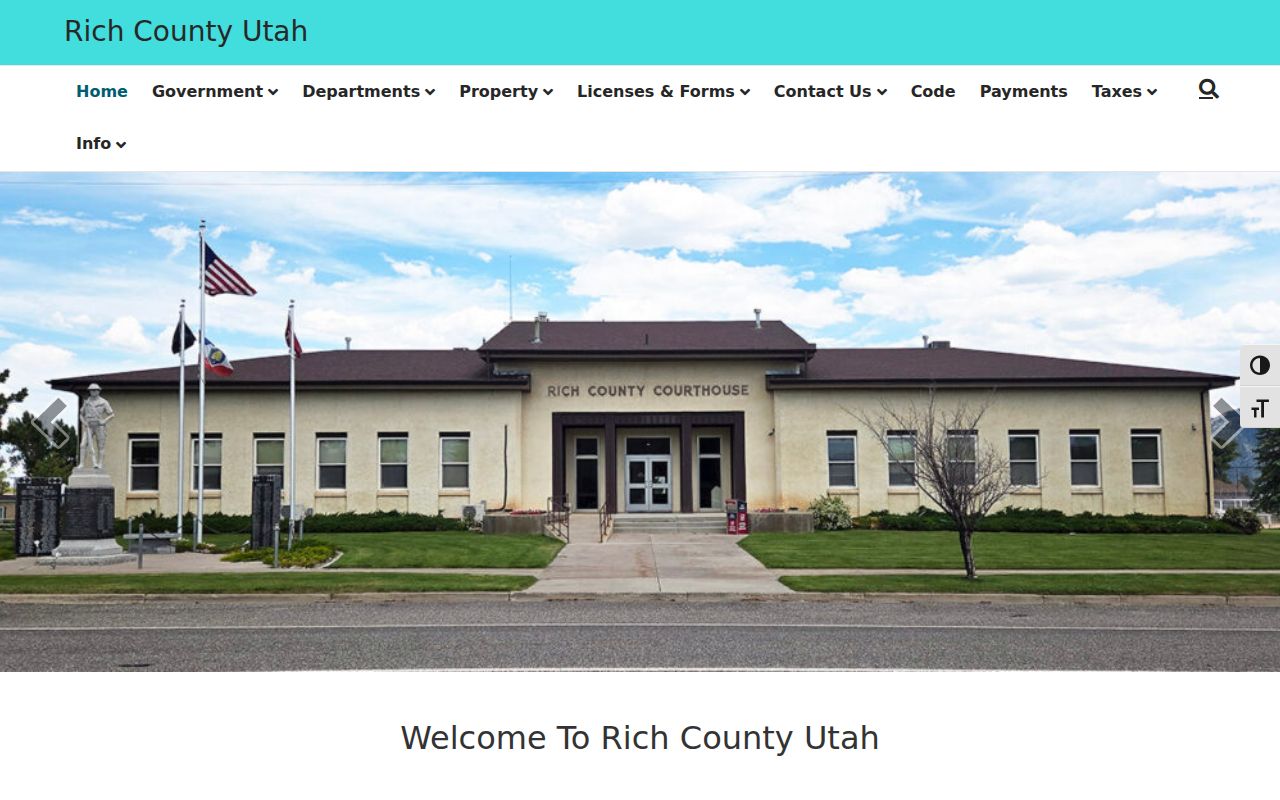
The county screen supplies local contacts, while Utah Courts supplies judicial histories and dates.
Garden City Docket Search
602 residents · Confirm Administrative Court scope.
Randolph Docket Search
467 residents · County courts are in Randolph.
Laketown Docket Search
299 residents · Follow the named court route.
Woodruff Docket Search
169 residents · No town portal was located.
Map and Directions to the Rich County Courthouse
Both the First District Court and the Rich County Justice Court keep their case files at the Rich County Courthouse, 20 South Main, in Randolph, the county's courthouse town. District Court handles felonies, class A misdemeanors, general civil, domestic, probate, judgment, tort, and property-rights matters, while Justice Court handles traffic, infractions, class B/C misdemeanors, ordinances, and small claims from the same building. Deputy Clerk Shantel Jensen is the listed contact for the district docket. No room, floor, or public-terminal number for either clerk's counter was published, so the front counter is the place to start.
The research located no published courthouse hours, parking rules, or security-screening detail for this address, so calling 435-793-2415 before a visit is the surest way to confirm the correct counter or terminal and whether the record sought falls in the district or justice docket.